 Collage: Gabrielle Langdon; Source images: Polly Blitzer; Courtesy of brandSave this storySave this story
Testing red light therapy for hair loss feels a little like speed dating for your scalp. You try one device and wait three months. No sparks. Try another. Still thinning. One smells suspiciously like hot plastic. Another has to be plugged in while you use it.
It’s no wonder dermatologists are cautious when recommending home-use red light therapy devices. Many don’t have the power, consistency, or FDA-cleared specs to show real results. So, when I started using the CurrentBody LED Hair Growth Helmet, my expectations were…tempered. I’d seen it all before: sci-fi imagery, big promises, small print. What I hadn’t seen? My hairline looking fuller after just a few weeks.
Turns out, this helmet is more than a buzzy beauty gadget. It’s the first at-home red-light therapy device that made me feel like maybe—just maybe—science was finally on my side in the battle against hair loss.
Read aheadLargeChevron
- What's the Currentbody LED Hair Growth Helmet?
- How theCurrentbody LED Hair Growth Helmet works
- How I tested the Currentbody LED Hair Growth Helmet
- What else is out there?
- Does the CurrentBody LED hair mask work?
- Where to buy it
- How we test and review products
- Our staff and testers
What's the Currentbody LED Hair Growth Helmet?
CurrentBody isn’t new to the red light game. The beauty-tech brand made waves (wavelengths?) with its cult-favorite LED face mask—a staple in celebrity Instagram routines and among Allure award winners alike. But while their skin-care innovations have long earned praise, their LED Hair Growth Helmet is the brand’s under-the-radar masterpiece.
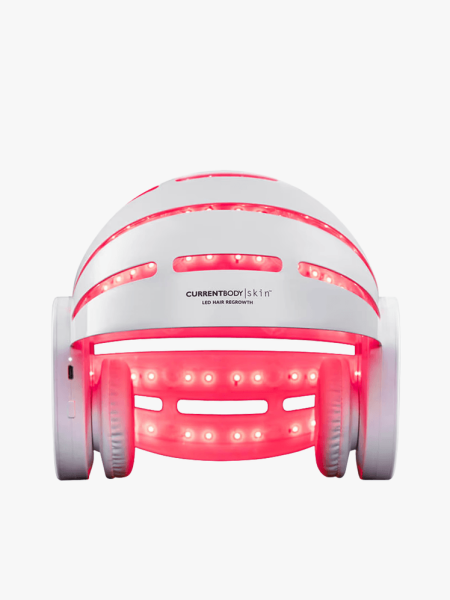
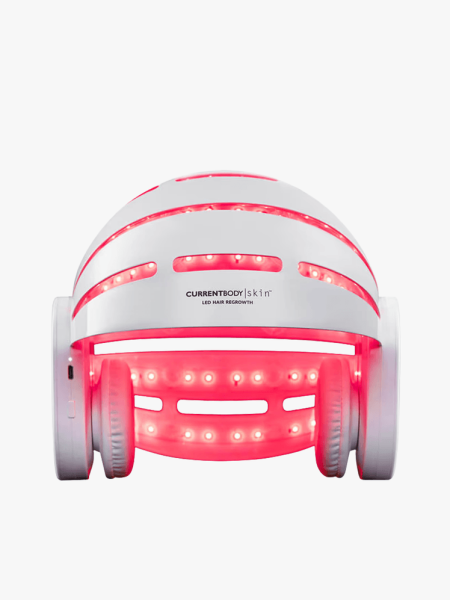
The LED light therapy device is FDA-cleared for androgenetic alopecia (read: hereditary hair loss) in both men and women and uses 120 medical-grade red light lasers to stimulate hair follicles and improve density. A word to the wise: FDA clearance doesn't mean anything more than the device is "substantially equivalent" to one that's already approved by the FDA. It’s shaped like a sleek, matte-white dome—think Daft Punk meets Dyson Airwrap—and fits comfortably over your head without the pinchy, rigid feel of earlier models I’ve tried.
CurrentBody
LED Hair Growth Helmet
CurrentBody
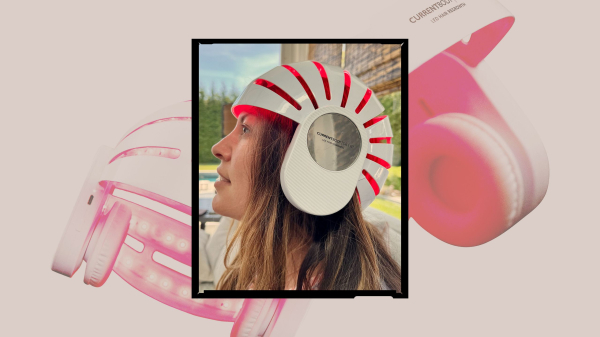
Writer Polly Blitzer wearing the CurrentBody LED Hair Growth Helmet
Polly Blitzer
What comes with the CurrentBody LED Hair Growth Helmet
LargeChevron
Inside the box, you'll find:
- The LED Hair Growth Helmet
- A USB charging cord
- A non-charging base
- A user manual
How the brand tested this product for efficacy
LargeChevron
In an independent clinical trial (in which experts evaluated results and participants shared self-assessments), users experienced a 128% increase in hair growth, 72% reduction in hair loss, and 26% increase in hair density after 12 weeks. However, this doesn't appear to have been a double-blind, randomized study, which is Allure's preferred kind of product testing. You can find the full report on the brand's website.
But here’s where it stands out: Most home devices use a mix of LED lights and lasers, often just 20 to 40 light sources total. CurrentBody went all in on pure laser diodes, which penetrate the scalp more deeply and effectively than LEDs alone, according to a 2020 study. The result? Stronger stimulation where it counts, at the follicle level.
“I do think red light works and it’s another tool in your tool belt,” says Dhaval Bhanusali, MD, a board-certified dermatologist in New York City who specializes in hair loss, who uses red-light treatments on patients in his office. “If you have irritation or inflamed follicles, the red light puts out the fire a little bit. If you try to grow plants in lava, it’ll never happen.” Another thought is that it can reduce levels of certain hormones associated with androgenetic alopecia, like dihydrotestosterone, or DHT.
And it’s not just anecdotal. One study found that combining red light therapy with minoxidil and finasteride improved hair density and strength around the temples by 55% in women and 74% in men. Another study showed consistent daily use over four months led to significant improvements in hair count and scalp coverage, especially in people with androgenetic alopecia.
How the Currentbody LED Hair Growth Helmet works
Let’s talk wavelengths. The helmet uses 650nm red light, which, according to dermatologists, is the sweet spot for penetrating the scalp without heating or damaging tissue. Red light at this wavelength increases blood flow and energizes the hair follicle. It can shift follicles from the resting phase into the growth phase.
But beyond the tech specs, it’s the ease of use that won me over. It’s a 10-minute treatment, three times a week. That’s it. No wires, no app syncing, no frustrating remotes—though it does have Bluetooth speakers that connect to your phone so you can listen to music or podcasts while you wait. You pop it on, it beeps to start, and again to stop. In the time it takes to scroll through your For You Page or make a matcha, you’ve completed a full treatment. And, of course, it's non-invasive and pain-free.
Inside the helmet, flexible silicone padding ensures a snug, comfortable fit. And because the lasers are embedded throughout the dome, you get even coverage—crucial for someone like me whose thinning wasn’t just on the crown but also along the temples.
How I tested the Currentbody LED Hair Growth Helmet
I’m in my 40s and have dealt with slow, sneaky hair thinning for the past few years. Blame it on stress, genes, or my love affair with hair-tugging blowouts. I’ve tried minoxidil foam (messy), scalp serums (sticky), and hair supplements (meh). Red light therapy seemed like a passive win for new growth—if it worked.
Based on the brand's clinical tests, you can start seeing results at the 12-week mark. But by week four, my scalp looked less exposed in selfies. Around week six, baby hairs started sprouting around my temples—the kind that stand up straight and refuse to be tamed. I asked my hairstylist, who hadn’t seen me in three months, if she noticed anything. Her response: “What are you doing differently? Your roots feel denser.”
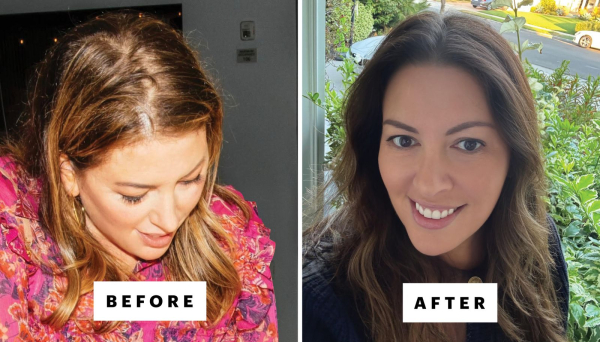
Blitzer before and after using the CurrentBody Hair Growth Helmet for three months.
Courtesy of subject
What else is out there?
If $859 feels steep—I hear you—there are lower-cost options that meet the same technical specs. The HigherDose Red Light Hat (yes, the one Courteney Cox posted about) is a more subtle baseball-cap style with similarly strong tech cred. What CurrentBody adds to the equation is consistency and coverage. The helmet’s design ensures uniform energy delivery, meaning fewer dead zones where follicles are missed.
Does the CurrentBody LED hair mask work?
Red light therapy isn’t magic. But it is science—and the CurrentBody LED Hair Growth Helmet is one of the few devices that delivers it with both clinical power and ease of use. It won’t replace in-office treatments or prescription meds. But if you’re someone dealing with early-stage hair loss, postpartum shedding, or just want to buy your follicles some time, this device is the most effortless, irritation-free solution I’ve tried.
And for the first time in years, I no longer part my hair a certain way to hide thinning. That freedom? Priceless.
CurrentBody
LED Hair Growth Helmet
CurrentBody
Where to buy the CurrentBody LED Hair Growth Helmet
The CurrentBody LED Hair Growth Helmet is available for $859 at currentbody.com. It's a splurge, no question. But unlike bottles that run out or serums you forget to apply, this helmet is a one-time investment with long-term payoff.
How we test and review products
When Allure tests a product, our editors look at it from every angle in an effort to best serve you. We are particularly discerning when writing about devices. This is because of the increased risks and, in many cases, the high price points, that accompany at-home dermatological tools and devices.
Each device we test undergoes extensive testing and vetting, and must be approved by senior members of our beauty team prior to appearing in Allure. For the Currentbody LED Hair Growth Helmet, our writer, Polly Blitzer, sought out different types of products (with the guidance of board-certified dermatologists) to treat her hair loss. Blitzer is experiencing female pattern hair loss in her 40s, and is the exact kind of customer who would buy and benefit from this type of advice. This was important to us for our review, as we don't want someone who isn't currently experiencing hair loss to be the primary tester.
Additionally, our editorial team consults board-certified dermatologists and cosmetic chemists about the science behind product claims and independently reviews any studies cited by brands. To learn more information on what's involved in our reporting, check out our complete reviews process and methodology page.